
Rib Steak

T-bone steak (TXULETÓN) – we hear that word and we start salivating, thinking about its texture and flavor. For many, it’s the favorite piece of meat, never equaled, not even by the finest and most tender sirloin. Grilled T-bone steak has something special about it, and it generates an almost atavistic thought when we taste it, which produces (in many of us) a
A little history

The steak here is called “txuletón,” which may be the origin of this prized morsel. There is evidence that people in the Basque Country gathered around this cut of meat on special occasions as early as the 18th century. In the farmhouses of the Cantabrian coast and parts of Europe, males were castrated to develop greater size and strength, as they performed field work in pairs and also served as heating when winter arrived. However, in the farmsteads of the Basque Country, when they reached old age, the oxen continued to receive care for a year or more, accumulating intramuscular fat and gaining weight, as they did no work at all. With slaughter came the utilization of this weight gain, and the loin was considered the best cut, the most prized.
But starting in 1890, animal traction began to be replaced by mechanical traction in the baserris, the main application of the Industrial Revolution in agriculture. Therefore, it was the arrival of the tractor that led to the departure of these cows to the “market,” no longer necessary or profitable as they had been in the past. Then, true pilgrimage sites for rib-eye steak makers emerged that still retain their fame today: Berriz, Tolosa… and the txuletón became popular. One of the stars of Basque gastronomy was born.
Today, oxen no longer play a role in baserris, and cows from small farms have been disappearing due to globalization and centralization of milk production. Nowadays, the Txuletones we eat mostly come from Germany, Holland, Austria, Poland, etc., where most of Europe’s livestock farms are located. Of course, we also have high-quality meat here, but it’s not enough for everyone.

Rib Steak
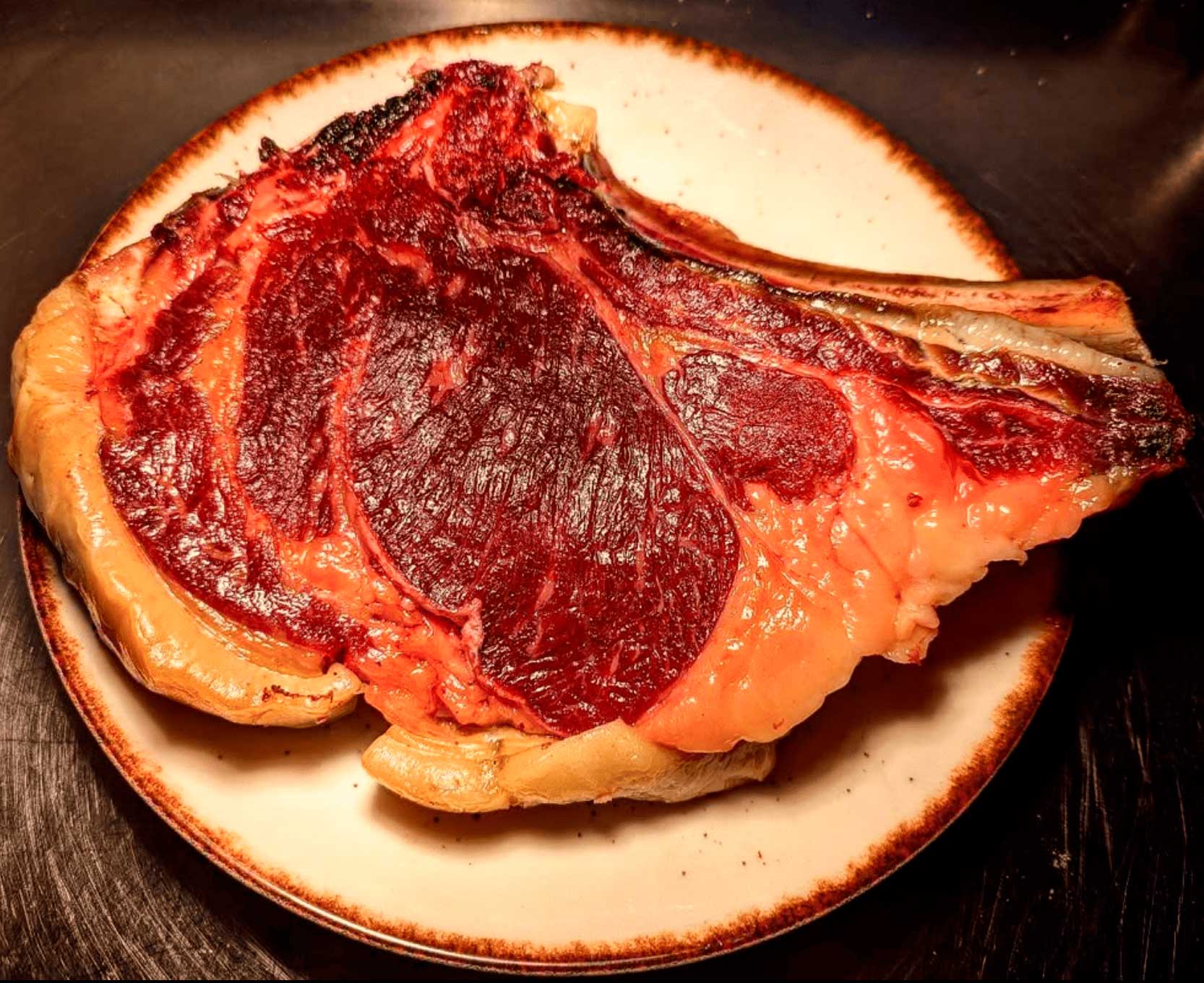
The beef loin has 13 ribs and can be divided into two parts: the top and the bottom. This forms what is known as the ribeye. Therefore, the txuletón is the bone-in cut and can be from the top or bottom. The top loin, on the other hand, has greater intramuscular fat infiltration and therefore greater juiciness (hence its traditional reputation), but it also includes three muscles connected by intermuscular fat that end up discarded on the plate, resulting in greater waste. The bottom loin, on the other hand, has slightly less intramuscular fat and practically no intermuscular fat, so almost all of it is used.
At Sugarra, we’re committed to grilling the txuletón in a different way, with intense fire and smoke at the same time. We cook the meat at temperatures that can reach almost 400°C (in the Kamado we use), creating a thicker, almost crispy layer and a much more pronounced chargrilled flavor, while leaving the interior intensely red. This is why we say we have a different kind of steak; we’re not competing; we’ve simply rethought the way we cook it.
Maturation
Once the cow has been slaughtered, it must remain in a state of cold and rest, during which rigor mortis gradually disappears. This phase lasts at least one week and ends almost completely after 30 days. Next comes the meat maturation phase, where enzymes break down muscle proteins, giving the piece greater tenderness and greater intensity of flavor.
There is dry aging and vacuum wet aging. Dry aging takes place in a ventilated cold chamber, maintaining the temperature between 1º and 3º C and maintaining a humidity level between 65% and 85%. During this type of aging, the meat suffers significant loss, which improves the organoleptic properties of the future T-bone steak and enhances the flavors our palates will greatly appreciate.
At Sugarra, we have T-bone steak that are dry-aged for around two months, which we believe is the perfect point. However, there are much longer maturations (even more than a year) where flavors and aromas related to controlled putrefaction already appear, and these nuances are not pleasant for many people.
And of course, after the maturation process comes the embers of the grill, in our case the Kamado, which will allow us to enjoy the T-bone steak at its full potential. But that’s a different topic, and we’ll leave it for later. In the meantime, we’ll temper the meat…
Discover more